thecommunityplaybook.co
A planning tool for coliving and long-stay operators: model the social outcome of a stay before the guests arrive.
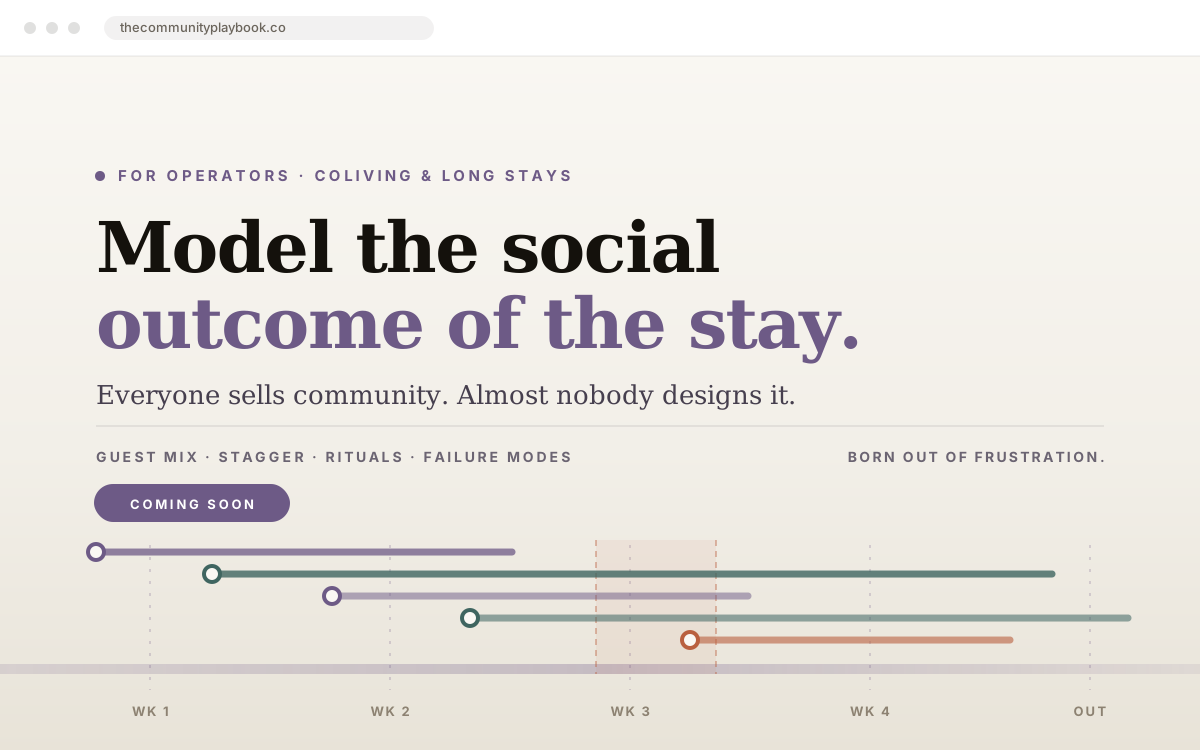
Genesis
Every coliving space sells community. Almost none of them design it. The building gets an architect, the website gets a brand, the breakfast gets a supplier — and the thing guests actually pay for is left to chance and a WhatsApp group.
Which mostly works, until it doesn’t. Anyone who has run a house knows both outcomes and cannot reliably explain the difference between them. Same rooms, same price, same photos: one month the group cooks together and extends their stays, the next month eight people eat separately in their rooms for three weeks. Operators call the good ones magic and the bad ones bad luck. They are neither. They’re the predictable output of who arrived, when, for how long, and what the week was shaped like.
The Community Playbook is that reasoning written down and made usable — a way to model the social outcome of a stay while it’s still a spreadsheet of bookings, rather than diagnosing it afterwards from the reviews.
Features
- Guest-mix modelling — the composition that actually drives a house: stay lengths, arrival stagger, returning guests versus first-timers, and how many solo travellers a group can carry before it stops being one.
- The shape of the week — anchor points, communal meals, work blocks, the one evening that does the heavy lifting. Rituals that survive contact with a real house, and the ones that quietly die by Wednesday.
- Failure modes, named — the house that goes flat in week three, the single dominant guest, the pair who arrive together and never open up, the departure cluster that empties the room overnight. Each with the early signal and the intervention.
- Roles — what the host is actually for, which guests unknowingly hold a house together, and what happens the week they leave.
- Post-stay review — recording what the group did rather than what the feedback form says it enjoyed, so a house accumulates evidence instead of anecdotes.
- Playbooks, plural — a retreat, a three-month workation house and a rural guesthouse are different social machines. Templates per shape, not one universal answer.
Who it’s for
Operators and hosts: coliving spaces, long-stay guesthouses, workation venues, retreat organisers — anyone responsible for a group of near-strangers who will be sharing a kitchen for longer than a weekend. It assumes the reader already runs a place and does not need convincing that community matters, only help making it happen twice in a row.
Why not just hire good hosts
Because good hosts leave, and take the method with them. Most operators are one departure away from losing everything they know about running their own house, largely because none of it was ever written down. The playbook is the part that should outlast the person.
Where it stands
In development, with a pre-launch page up. Structure first — the model, the failure modes, the templates — before any of it becomes software. Born out of frustration, which is a reliable if unglamorous source of product ideas.